
Margaret Mitchell interviews Paul Clements
Margaret spoke with Paul Clements, a photographer who has worked across photojournalism, education and self-directed projects. The conversation considers personaI history, belief systems and reflective practices within photography.
MM: Thank you Paul for taking the time to talk to us about your work. Firstly, can you give an insight into how you started in photography and what drew you to it. You previously worked in the NHS before becoming a photojournalist, how did that transition happen?
PC: It’s a pleasure, thanks for having me! Throughout my life I’ve always tried to rebel against the system, looking back at it now it was probably less about rebelling and more about creativity.
I trained as an Operating Department Assistant from 1985 to 1987 and later for a medical agency to help fund my studies. I loved working in the NHS, but I was also in love with photography. I read The Observer every Sunday and saw Jane Bown’s work – I knew that she was using an OM1 and so went for the same camera! As an ODA I would also pester the medical photographers when they came to theatre, sometimes to photograph unusual operations or evidence from crime victims. I’d look forward to the weekend news magazines, anything that caught my eye, was cut out and kept, and I’d put some up on the wall in the anaesthetic room where I worked.
I would go to London at weekends to see exhibitions at The Photographers Gallery. Francis Hodgson kindly showed me Bill Brandts work in the Print Room. I also met Sharon Chazan there who was a student at Newport at the time. She was later tragically killed by a man she’d photographed. The film Just Enough Distance covers the tragic circumstances that led to her death. I credit Sharon with giving me the confidence to do a photography course.
Around 1990, I bought a copy of “The Knife and Gun Club” by Eugene Richards about an American Emergency Department. I was living this every day at the hospital I was working in, so it was the final catalyst. I applied to Newport and to Napier in Edinburgh but ultimately chose Napier as it was a degree. David Hurn had sadly just left Newport, another reason for my choice.
MM: That’s a richly textured background, thank you Paul. You ended up studying at both Napier and LCC. How important was formal education in developing your understanding of photography and career? You also became a lecturer in later years. Can you share what both being a student and educator gave you?
PC: Being at Napier for four years was wonderful. Napier’s photography department was in a Victorian converted school building which was separate from the main campus. The building only had photography students, across different years. This formal education gave me a solid grounding, and we also had other modules including graphic design, art history, psychology and “ways of seeing”. The art history module really awoke my vision. Lying on the floor in the National Gallery in Edinburgh looking up at the collection of Titians was mind blowing. At the end of my four years, I wanted more, so applied to LCC for the PgDip in Photojournalism. The class was small with around fifteen students. It had aspects of the Newport Documentary Photography Course, simultaneously working on two or three photographic assignments and turning work around very quickly.
In 2017 I became a tutor on the MA Photography at Falmouth University. This involved a lot of reading, not only around my own personal preferences, but also the various subjects the students themselves were interested in, as well as for the work they were producing. It was a two-way process, and I learnt so much from the students and colleagues. I certainly miss the sense of community within that job.
MM: As a student, are there any single images, or projects you made that influenced how you shaped your career?
PC: I don’t think there was a single image, or a body of work I made myself that influenced my career. I think it was an amalgamation of everything that I was exposed to that defined the trajectory of my career.
Interestingly, the single image that is most influential for me, and is deeply tied to photography, is Caravaggio’s The Incredulity of Saint Thomas. Caravaggio kicked against the rules that had guided so many artists before who had glorified the religious experience. This particular image fascinates me, not only for its composition, its theatrical light, but also for the presence of trauma.
While seeing and believing have been joined together for a very long time, in Caravaggio’s painting, one of the most significant formulations in the Christian tradition focuses on its complete inverse. It asserts that believing should not be dependent on seeing – that believing based on sight is an inferior belief. It really got me thinking about the veracity of photographs, and to remember the photograph can neither lie nor tell the truth. A photograph is mute and relies on others to speak for it, and about it. There are so many questions around these assertions when it comes to photography.
Other influential work includes Gilles Peress, Robert Frank, Larry Clark which resonated with me as a student. But it was also my English Teacher back at school who introduced me to William Blake, which wins when it comes to imagination, rebellion and to question the accepted narrative.
MM:You worked in News photography during 1995-2010. What was that experience like, and how do you think that working world has changed since then?
PC: By the time I ‘d finished studying I was 33. Luckily, I ‘d got to know a couple of news photographers who’d delivered talks at university, so I called the picture desk at The Scotsman, and asked to do some work experience, and they said yes! Walking into the newsroom was like something from the film “All The President’s Men”. Loads of journalists at overflowing desks full of newspapers and copy and with a busy picture desk off to the side. Shadowing photographers and journalists for two weeks paid off, I made useful contacts and met other photographers who were very supportive.
I then received a call from The Glasgow Herald to cover a small assignment and from this lots of work followed from various national titles. The group of press photographers was quite small and there was a real sense of camaraderie. The Scotsman had a darkroom in the depths of the building where photographers would hang out together between jobs. It was the cusp of change, initially to colour film, with full digital just around the corner. Then, there was no need for photographers to go back to the office as we wired images straight back to the picture desk.
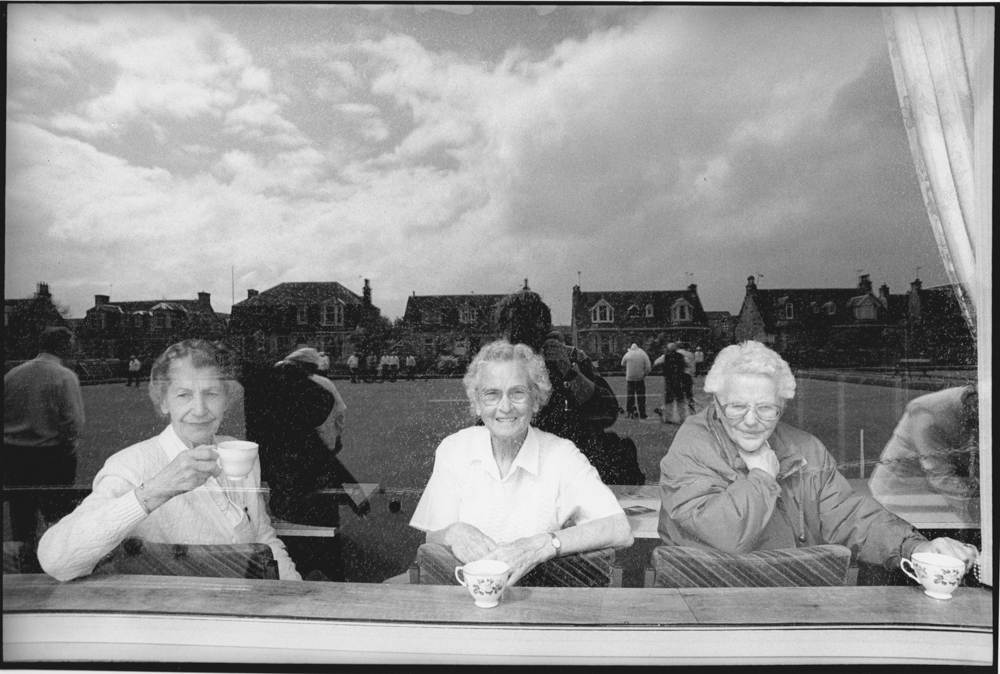
By 1999 I moved to London and doing more editorial work which was more daytime based, allowing me to do nursery and school runs. It was the very last moments of analogue, and of sending film back to Glasgow via the 24hr Post Office in Trafalgar Square. I loved doing editorial work, it had a slower pace to it, rather than running around doing lots of different news jobs in a day. I expanded my work from newspapers, and started picking-up jobs with other publications and some PR/Corporate work. Although it paid well, I found corporate work a little soul destroying and I started to drift.
I then began a long-term personal project on Palestinian Christians in the West Bank. I was also lucky to work with Simon Norfolk, whose partner was working with my wife. He called me asking if he could join me on my next trip to the West Bank. We went on to spend a week working together, I worked with 35mm and Simon with 10×8. At the back of my mind there was a lingering thought that Simon’s large format camera mounted on a tripod could have been mistaken for something more lethal from a distance, and I was always a bit wary when Israeli Army patrols were passing or when approaching checkpoints. I also began work with Neturei Karta, based in Stamford Hill in North London. They are a group of Orthodox Jews who follow traditional Judaism and these two projects are ongoing.
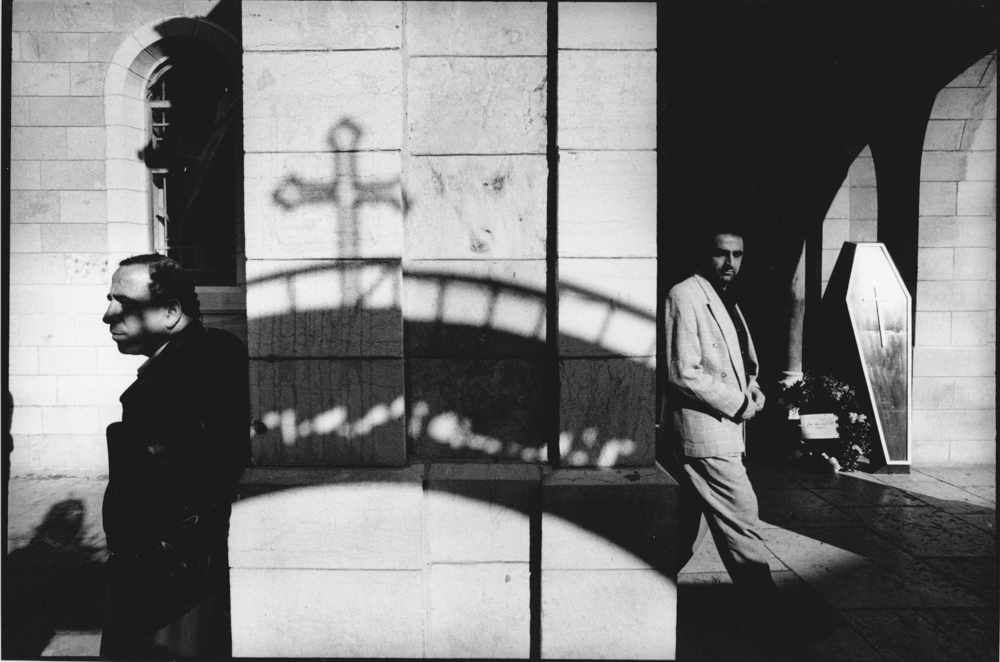
I don’t think life for a photographer can be a life of indifference. The working world has certainly changed for a photographer in this field. Budgets have been slashed and staff and many freelance roles have gone, and there will be further challenges with AI.
MM: You’ve spoken about the importance of research. What do you consider research adds to a photographer’s practice and what form does that take for you?
PC: I believe that it’s important to be challenged as a photographer, and research and reading does that. There is a lot of “theory resistance” amongst photographers and it’s not for everyone. For my neurodiverse brain, research helps me learn and I still get excited when I come across anything new that I’ve researched.
There have been enormous changes in the way we make and view work, but critics, photographers and educators continue to entrust an accepted doctrine of photographic theory predicted on old concepts. One text that had a strong influence on me was Vilém Flusser’s Towards a Philosophy of Photography. It is a small paperback that I carry with me in my bag, and it encourages me to take risks, embrace error, and not be restricted by the camera or its settings.
Many photographers seem to be more concerned with format rather than the content. I always believed that as photographers we were free to choose, and that the camera did precisely what we wanted it to do. However, Flusser claimed that a photographer’s choice is restricted to the cameras categories and it’s really a programmed freedom that we have. At the moment , I believe most photographers are either taught about what photographs signify, or learn to use cameras to accomplish good technical results. Photographers and educators are not encouraged to think about the co-operation and conflict between the camera and camera user, and I believe this tension is rarely explored.
It is really important as a photographer to critically examine why we are doing things, and in the way that we do these things. We have to disrupt traditional values of photography and really examine our role. Research, reading and your practice can help in that regard, it’s all part of the process to help your work evolve.
MM: What attracts you to certain subject matter. Can you give an example of an image or series that came from a deep connection and interest in that topic?
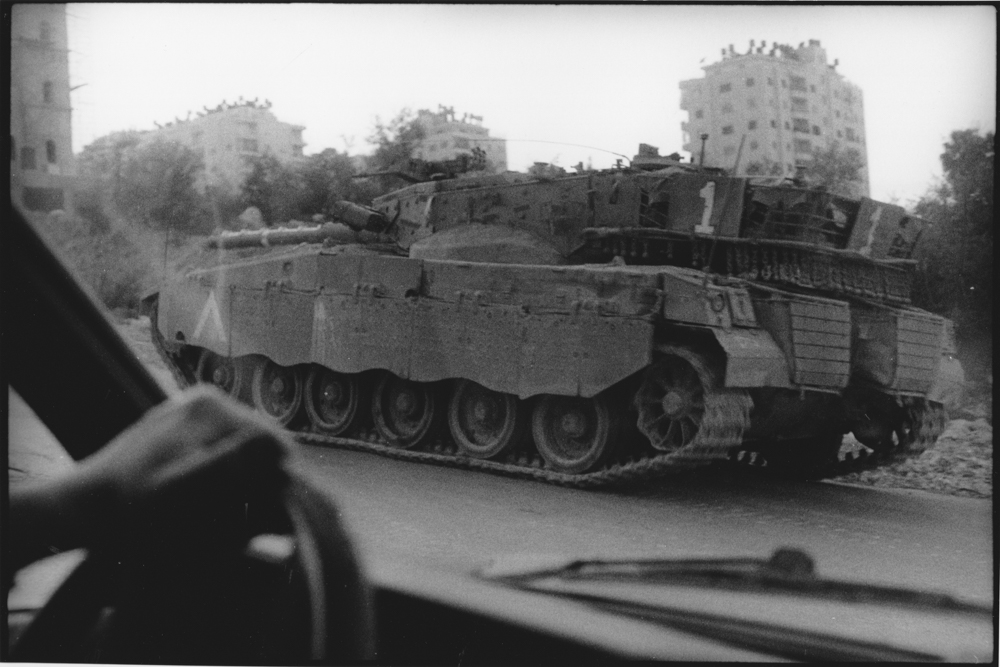
PC: It’s complicated, but my ongoing connection to and interest in Palestine is the clearest example. After leaving school at eighteen, I travelled extensively across Europe and into parts of the Middle East, eventually spending time in Turkey and later working in Tel Aviv. During that period, I was personally introduced to Palestinian history and culture, which had a lasting impact on how I understood the region. I have a deep love for the country and have been deeply saddened, not only by recent events but so many past events too. I try to return as a photojournalist, or visitor, whenever I can.
I am an idealist. I agree with W. Eugene Smith who rejected the notion of objective photojournalism, favouring instead honesty and personal truth. As a photojournalist, I can only have a personal approach to my work. I also bring my own history to my work, including traumatic events in my childhood around my father’s death and subsequent life events which I consider a union of trauma and love. This alliance between trauma and love continued with my work in the NHS, and as a photographer working in areas of conflict.
It’s also fascinating how Freud uses the metaphor of the camera to explain the unconscious as a place where parts of memory are stored until they are developed into conscious memories. Like the image waiting inside the camera, traumatic images become lodged in the psyche as a kind of glitch. These cannot be voluntarily bought to consciousness, and instead they must be ‘developed’ through a process of therapy or persist in the form of flashbacks outside of our control.
MM: It was interesting to hear you talk about use of language as it’s sometimes applied to photography, for example, the difficulty with the term “beautiful” in referencing certain images. Can you expand on that a little?
PC: Yes, goodness me, and nothing wrong with the word “beautiful” as such, it’s a lovely word, but it’s an overused term in photography. As photographers, we need to go beyond the literal description of the surface of an image, and “beautiful” is all about surface when used in this context. It is a ‘default’ by many when looking at images because they find it difficult to say anything else. I was at a Don McCullin exhibition a few years ago where people walked around in hushed tones looking at the images on the white walls – of carnage, death and destruction – whilst referring to them as “beautiful”.
We all need to improve our visual literacy skills, and we also need to understand how photographs come to exist in the first place. Being a former lecturer, I know that I can be pedantic and a pain at times, when I ask not for an opinion, but instead a reading of an image. I identify with Nietzsche quote that “To experience a thing as beautiful means: to experience it necessarily wrongly.” For me, that speaks to how easily photographs can aestheticise difficult or violent subject matter, and how that response can distance us from what we are actually looking at.
MM: Lastly, you’ve said before that photography is not simply storytelling. Can you expand on that idea and perhaps relate it to one of your own projects?
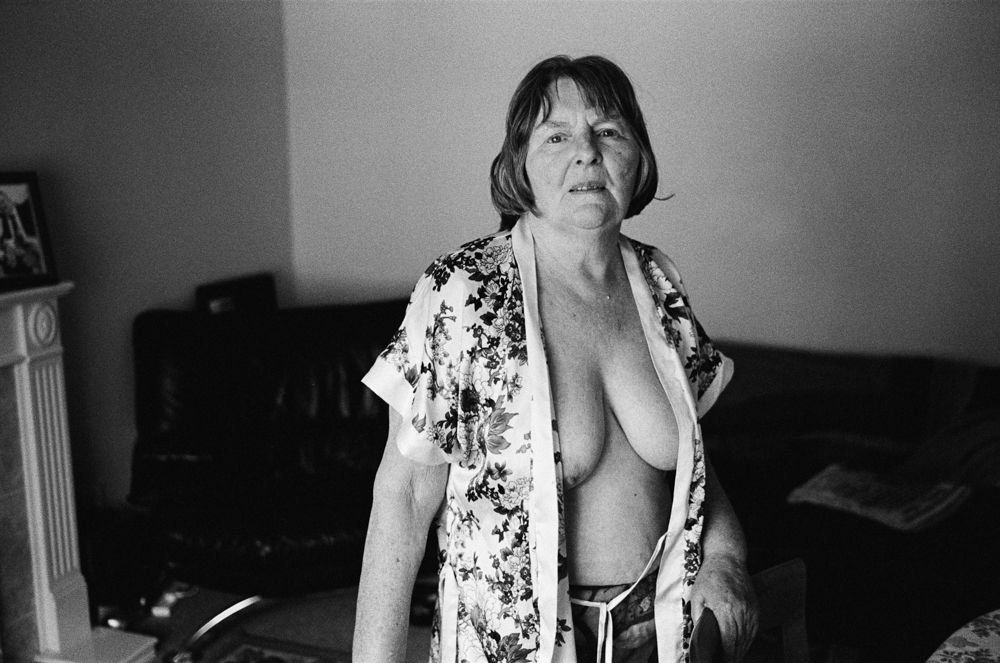
EW: I know many photographers and educators are obsessed with photographers having to tell a story, but that puts a lot of pressure to produce one. I believe that photographs are instead ‘a record of a response’ and that we need to follow our own intuition, not worry about validation, having to be unique or having to produce a story.
I’m also fascinated by the idea that a photograph creates a space that has no past, present and future. A kind of temporal dislocation and an alternative reality. This relates to my current work on Stane Street, the Roman road linking London with Chichester. It is both a physical route and a structure through which different times and experiences overlap. I have a personal connection to it through family associations with both difficult and formative experiences along its route.
My journey with this work is one of immanence, the way the spiritual world permeates the mundane, and a meditation on life’s travels, exploring the way the past infiltrates the present, and in turn influences the future. It will be an association with the road and the spiritual, it is an analogue of the journey we all take. I don’t see this as a story, I see it more like a mission to the stars.
Thank you Paul for this generous conversation. You can see more of Paul’s work on the links.
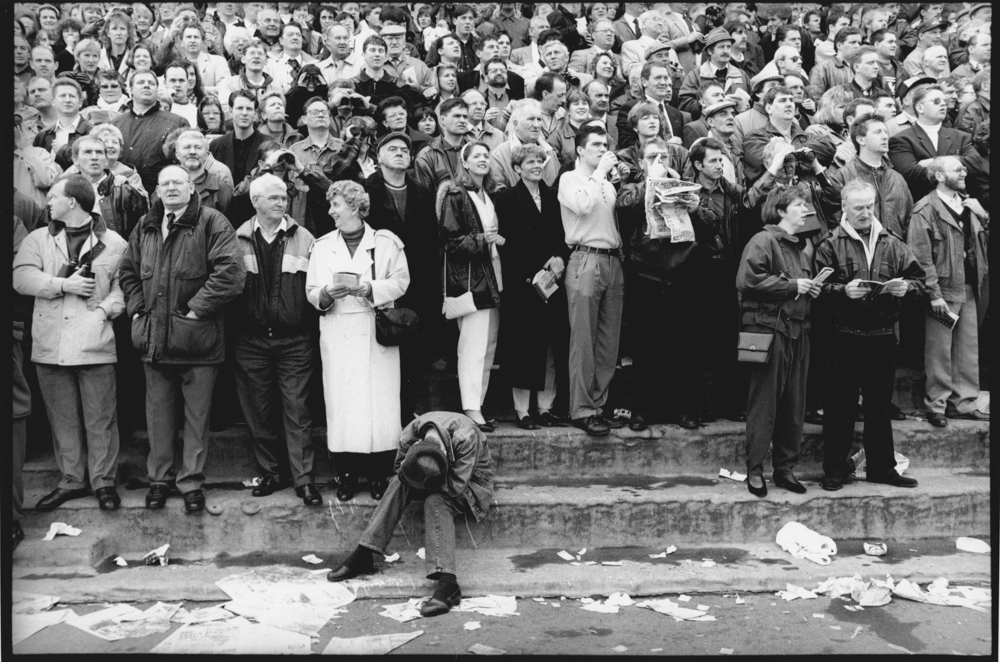
Header Image:Scottish Grand National. Ayr // © Paul Clements